The Beginner's Guide to Cigars
Faced with unfamiliar cigar names, what do you ask for? Once you have a cigar, which end do you cut, how do you light it, and are you supposed to inhale?
This guide explains how to choose, smoke, and understand a cigar. It covers conventional humidified cigars, usually sold from a humidor: a container or room that maintains suitable humidity. Pre-cut, dry-cured, and unusually shaped products may need different handling.
Cigar smoking is tobacco use. Its smoke contains harmful substances, including carcinogens, and exposes you to addictive nicotine. Not inhaling does not eliminate the risks. Cigar smoking causes cancers including those of the mouth, larynx, esophagus, and lung. National Cancer Institute
Need instructions now? Buying · Cutting · Lighting · Smoking · Problems · Finishing · Storing
Understand what you’re buying
A cigar is a tobacco product made for smoking. A conventional handmade cigar has three main tobacco components:
- Filler: tobacco inside the cigar.
- Binder: the leaf holding that filler together.
- Wrapper: the outer leaf you see.
The combination of tobaccos is the blend. All three components contribute to the result; the wrapper is not merely packaging, but neither does it tell you everything about the tobacco underneath. Habanos: cigar anatomy
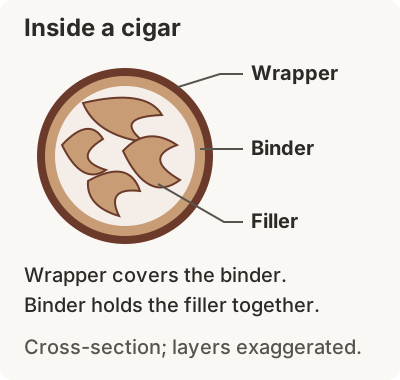
Why similar-looking cigars can differ
Leaf variety, growing conditions, and position on the plant help determine the tobacco available to a blender. After harvesting, curing dries the leaves and changes their characteristics. Fermentation is further controlled processing; tobacco may also be aged before use. Makers select and combine leaves, assemble the filler, apply a binder, and roll on the wrapper. Methods vary: Habanos describes its own leaf processing and rolling.
Leaf selection helps shape the intended flavor. Assembly also affects airflow, so two equally attractive cigars may draw differently. Manufacturers may check airflow during production, but appearance alone cannot certify smoking performance. Habanos: quality control
You may see long filler, meaning long leaf sections running along the cigar, and short filler, meaning smaller pieces. These describe construction, not a simple good-versus-bad ranking. Handmade does not automatically mean long filler: Habanos describes handmade production using both. Habanos: handmade production
Strength, body, and flavor
These terms answer different questions, although sellers and reviewers sometimes use them inconsistently:
| Term | Meaning in this guide |
|---|---|
| Strength | The perceived nicotine impact |
| Body | The fullness or richness of the experience, sometimes including smoke texture |
| Flavor | The tastes, aromas, and other sensory impressions you notice |
“Full-bodied” is not a standardized nicotine measurement. Ask what a seller means by “mild” or “intense.” A cigar can offer pronounced flavor without feeling especially strong. You don’t have to choose the least flavorful option simply because you are new. Tobacconist University: tasting terminology
Choose a cigar that fits the occasion
Tell the tobacconist your time limit, budget, and previous experience. “I have never smoked one” is useful information. So is “I liked the woody flavor last time, but it felt too strong.” Ordinary descriptions are enough; you don’t need to borrow a reviewer’s vocabulary.
Flavor preferences are optional. Liking strong coffee does not establish how much nicotine you will find comfortable. Start with a recommendation you can describe afterward, rather than trying to discover your definitive preference in the shop.
Time and budget come first
Explain how long you can comfortably sit. Staff can translate that into a suitable size. Smoking-time estimates are approximate, and you can stop whenever you choose; there is no obligation to finish a large cigar because you bought it.
Set a ceiling for a single cigar, then ask what the shop recommends below it. If you have no idea what to spend, ask: “What is your least expensive well-kept option that fits this occasion, and what would I gain by spending more?” More expensive does not necessarily mean more enjoyable.
Buy one before committing to a box. If two recommendations fit, choose the one whose description appeals to you, or the less expensive one if you have no preference yet.
Read dimensions, not just size names
A cigar’s format is often called its vitola. Names such as corona, robusto, toro, and Churchill are useful shorthand, but commercial names do not guarantee identical dimensions.
Length is normally listed in inches or millimeters. Ring gauge gives diameter in sixty-fourths of an inch: a 50-ring cigar is about 19.8 mm across. Ask about the actual dimensions and estimated smoking time of the cigar in front of you. Habanos: sizes and shapes
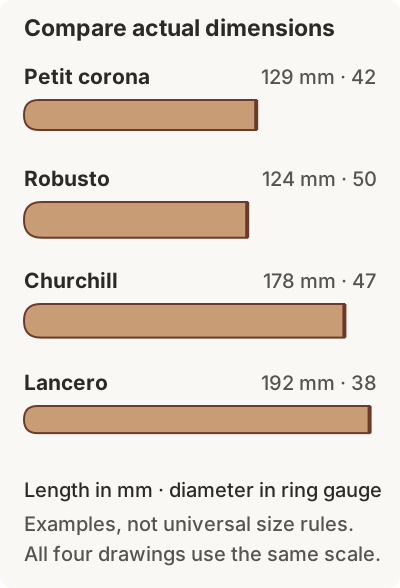
Dimensions affect how much tobacco you are buying and how it is arranged. Changing diameter can alter the proportions of wrapper and interior tobacco; makers may also adjust a blend between sizes. The experience can change, but width alone does not establish strength or guarantee a cooler burn. Habanos: format differences
Origin and wrapper are clues
Where a cigar is made and where its tobacco grows are different questions. A blend may combine several countries. For example, Davidoff’s Signature No. 2 listing specifies an Ecuadorian wrapper with Dominican binder and filler. Davidoff specifications
Cuban origin is not a guarantee that you will prefer a cigar to one from Nicaragua, Honduras, the Dominican Republic, or elsewhere. Nor does a dark wrapper reliably tell you its nicotine strength. Ask about the complete blend rather than choosing by color. Tobacconist University: beginner selection
Inspect without trying to diagnose everything
Ask before handling stock. Look for an intact wrapper, especially at the ends, and ask staff about visible splits, holes, or unfamiliar surface growth. Natural veins and color variations are not automatically faults; neither is a less glossy surface. Habanos: choosing a cigar
Your job is to notice obvious damage, not certify quality. Looking at the wrapper cannot tell you exactly how the cigar will draw or whether you will enjoy it. Handle gently rather than squeezing to find out.
Prepare: identify, cut, and light
The head goes in your mouth. On a conventional handmade cigar it is closed by a small piece of tobacco called the cap. The shoulder is where the rounded head meets the straight-sided part. The foot, normally showing exposed tobacco, is the end you light.
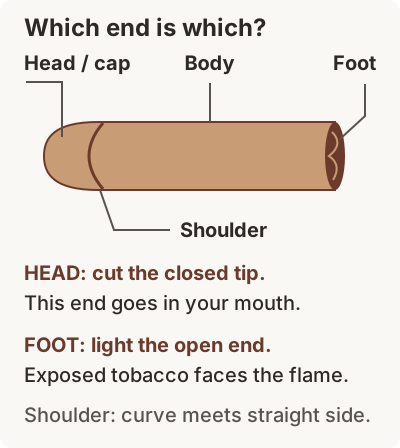
Straight-sided cigars are called parejos; shaped formats, often with tapered ends, are figurados. A rounded head and open foot give you the simplest place to learn. Ask staff to demonstrate unusual shapes rather than applying the same cut to every cigar.
The pacing above is practitioner advice, not a rule or a safety threshold. Cigar Aficionado: pacing The symptom guidance follows Poison Control.
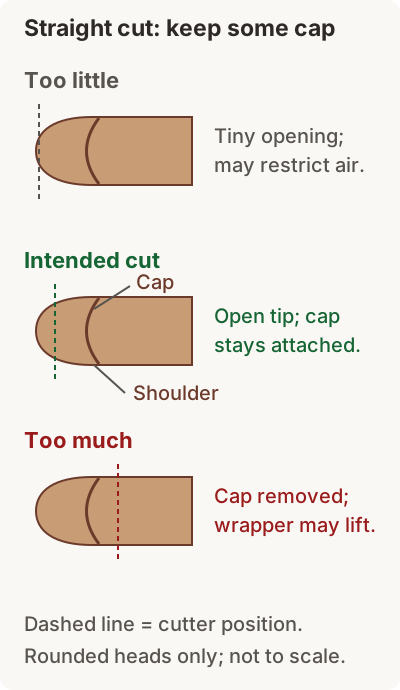
A sharp double-bladed cutter is a useful first tool. The exact cut depends on the cap and shape; there is no universal millimeter depth. Retaining some cap is the key principle. Cigar Aficionado: cutting
A punch makes a circular hole; a V-cutter makes a wedge-shaped opening. Both are alternatives, not extra equipment you need immediately. Pointed heads require adapted technique, and a punch does not suit every shape. Cigars International: cutting methods
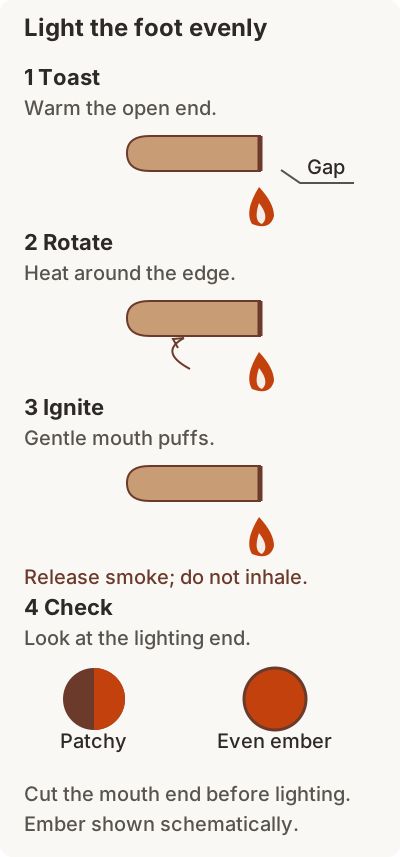
Butane lighters and suitable wooden matches are practical choices. Let a match’s initial flare settle. Cedar spills—thin strips used for lighting—are optional. The aim is an even start; a separate toasting stage is a helpful technique, not a ceremony you must perfect. Cigar Aficionado: lighting
Smoke at a comfortable pace
Mouth puffs, not inhalation
Draw smoke into your mouth, then release it without taking a breath through the cigar. Non-inhalation does not prevent nicotine exposure: nicotine can be absorbed through the lining of your mouth. It does not remove the health risks either. National Cancer Institute
How slowly should you smoke?
The roughly 30–60-second pause is a starting point, not a target to meet. Put the cigar down between puffs and notice the result. Repeated hard puffing can make the experience hot and unpleasant. If that happens, pause; if it goes out, you can relight it instead of constantly puffing to keep it burning. Cigar Aficionado: smoking pace
Draw, burn, and ash
Draw is the resistance you feel when pulling air through the cigar. It should feel usable without strain. A tight draw has several possible causes, including construction and moisture; one symptom does not identify which. Tobacconist University: tight draw
Burn describes how the lit portion progresses. Slight unevenness may settle without intervention. If one edge persistently lags, a brief touch of flame to that unburned area may help. It is not necessary to keep correcting every small difference. Tobacconist University: touch-ups
Ash is not a scorecard. You do not need to judge the cigar by ash color or preserve a long column to smoke it properly. Hold it over the ashtray and gently release loose ash rather than balancing it over your clothes.
Relighting is accepted practice, not a breach of etiquette. Flavor can change after an interruption; stop if you no longer enjoy it. Tobacconist University: relighting Nausea, dizziness, and sweating can occur with excessive nicotine exposure but are not specific to it. Do not push through discomfort. Poison Control
When is a cigar finished?
When you have had enough. You do not have to reach the band or smoke a prescribed fraction. Stop if the experience becomes unpleasant or your available time ends. Rest it securely in an ashtray, let it extinguish, and make sure it is out before disposal.
Band removal is a preference. If the band is stuck, forcing it can tear the wrapper; leaving it until later may help. Remove it before the ember approaches, or stop before then. Cigar Aficionado: band removal
Venues may have rules about bringing your own cigars; ask before settling in. Consideration also involves health: ventilation and air cleaning do not eliminate secondhand-smoke exposure. CDC
Appreciate what you’re experiencing
Start with two questions: “What stands out?” and “Do I like it?” An answer such as “woody, quite dry, and pleasant” is enough.
Notice broad impressions before chasing precise notes. Does it feel light or rich, creamy or sharp? Do you recognize woody, earthy, spicy, nutty, or roasted flavors? Is the aroma pleasant? Has something changed since the beginning?
Taste, aroma, and texture
Smell contributes substantially to what we experience as flavor. Odors can reach receptors through the nostrils and through the route connecting the mouth and throat to the nasal cavity. This helps explain why aroma deserves attention alongside taste. NIDCD: smell
“Nutty” or “cocoa-like” describes a resemblance, not proof of an ingredient. Some cigars are separately sold with added flavors; ask if you want an unflavored product. A peppery sensation is not a nicotine measurement, either.
You may use different words from a reviewer describing the same cigar. Sensory vocabulary communicates experience; it is not an answer key.
Finish, balance, and change
The finish is what lingers after a puff. Complexity describes perceived variety or development; balance describes how well the impressions seem to fit together. These are useful judgments, not standardized measurements. Tobacconist University: tasting experience
You don’t need separate notes for the first, second, and final thirds. “It began gently, became richer, then stopped being pleasant” is useful information. Consistency can be enjoyable too.
Retrohaling and drinks are optional
Retrohaling means passing smoke from the mouth out through the nose without intentionally inhaling it into the lungs. It changes aroma perception and can be irritating. You do not need to do it to appreciate a cigar, and it should not be treated as harmless. Tobacconist University: retrohaling
Water is a simple starting choice if you want fewer competing flavors. Coffee, tea, and other drinks can come later. Pairing suggestions usually work through similarity or contrast; they are ideas to try, not objective rules. Alcohol is not required. Tobacconist University: pairing
Store the cigars you aren’t smoking yet
One cigar for tomorrow does not require the same setup as several boxes. First establish what you own and how long you intend to keep it.
This pack example follows Boveda’s RH guidance and use instructions; other systems have their own instructions.
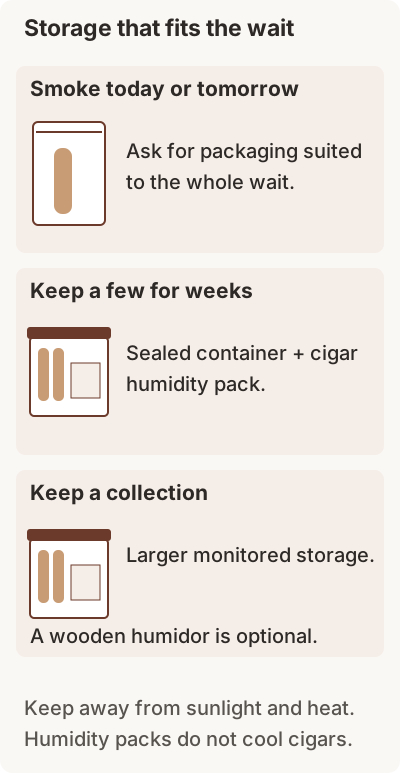
Today or tomorrow
A tube or ordinary box provides protection, but do not assume it maintains humidity indefinitely. There is no universal number of hours an unprotected cigar remains in good condition: its starting condition and surroundings matter. Carrying cases also differ in how well they retain moisture. Villiger: storage and transport
Ask whether the cigar is ready to smoke. There is no fixed resting period established for every purchase. Acclimatizing tobacco after unsuitable transport conditions is a different question from buying a well-kept cigar for immediate use.
Several cigars for weeks
A two-way humidity pack releases or absorbs moisture within its capacity. It cannot compensate indefinitely for a poor seal. A hygrometer measures the relative humidity inside the container; check it according to the instrument’s instructions.
Relative humidity, or RH, describes air moisture relative to saturation at the same temperature. It is not the percentage of water inside the cigar. American Meteorological Society
For the humidified cigars covered here, roughly 65–70% RH is a commonly used starting region, not a scientifically established universal optimum. Habanos recommends 65–70% for its products, while Boveda offers settings for different storage circumstances. Habanos: storage, Boveda: RH selection
The traditional 70/70 rule—70% RH at 70°F, about 21°C—is not mandatory. Habanos recommends a cooler 16–18°C; that is producer guidance, not a requirement to buy refrigerated storage before keeping a few cigars. Choose a suitable stable location away from heat and sunlight. A household refrigerator is not a substitute for cigar storage. Habanos: storage advice
A collection
A wooden humidor may appeal for its capacity, organization, or appearance. It is one option, not an admission requirement. A larger sealed storage system can serve the same practical purpose if conditions are maintained.
Wooden interiors may need seasoning—conditioning before adding cigars. Follow that humidor’s setup method. High-humidity packs sold for seasoning an empty wooden humidor are not ordinary storage packs. Boveda: seasoning
Check conditions periodically. If readings remain unexpected, check the instrument, seal, and humidity system before making large changes. Unfamiliar surface growth needs caution rather than a confident diagnosis from a photograph. Holes or tobacco dust also merit attention: tobacco beetles are real stored-product pests. Isolate suspect cigars and seek advice rather than experimenting on the collection. University of Florida: cigarette beetle
Explore by building reference points
After a cigar, keep the band or photograph its name. Add three short notes:
- What was it? Brand, range, and size.
- What worked? Flavor, comfort, draw, or time commitment.
- What would you change? Less nicotine impact, a shorter smoke, different texture, or fewer burn problems.
Bring those notes back to the shop. “I liked the flavor, but wanted less nicotine impact and a shorter smoke” gives the tobacconist something concrete to work with.
If you choose to try another, change one thing where practical: another size in a familiar range, or a different blend with similar strength. Notice, compare, and use the difference to guide your next choice. You don’t need to memorize the cigar world—or progress toward stronger or more expensive cigars—to learn your preferences.